



There’s a common misconception amongst many parents that a child’s first set of teeth simply don’t matter ‘as they’ll fall out anyway.’ Paediatric Dentist Dr Tim Keys reveals why baby teeth are actually really important.
Dr Tim is a member of the Australian Dental Association, Australian and New Zealand Society of Paediatric Dentists, Australasian Academy of Paediatric Dentists, European Academy of Paediatric Dentistry, American Academy of Paediatric Dentistry and Royal Australasian College of Dentists. He is a Major in the Army and is an Associate Lecturer at the University of Queensland. loves providing dental care to children with special needs and dental anxieties. Dr Tim also provides care to children who have suffered trauma, are born without enough teeth, or too many teeth and other developmental anomalies. (via The Children’s Dental Centre)
When a child’s first tooth erupts, it’s a milestone filled with excitement and a few sleepless nights. While it’s a sign of your baby growing, it’s also the start of habits that will affect them for the rest of their life.
Baby (or primary) teeth are commonly thought to be only there for a few years, though keep in mind many 12 year olds still have baby teeth – so it can be longer than you think. However, their influence will last a lifetime and in fact one of the strongest predictors of poor adult oral health is poor oral health in childhood.
So while baby teeth do eventually fall out, the habits and environment established during childhood
often set the stage for a lifetime of dental challenges – or success.
They’re essential for eating, speaking, and smiling
Primary or baby teeth allow children to chew properly, ensuring they get the nutrition they need to grow. They also play an essential role in speech development and in building confidence when smiling or interacting socially.
When baby teeth are decayed, broken, or lost too early before they were meant to through decay for example, it can not only limit a child’s ability to eat a full range of foods, but also cause speech delays and lead to emotional distress and self-esteem issues. Pain from tooth decay can affect sleep, learning, and behaviour. So it’s not just a mouth problem – it becomes a whole-body, whole-child issue.
They hold the space for adult teeth
Each baby tooth acts as a placeholder for the adult tooth underneath. If a baby tooth is lost prematurely – whether due to trauma or decay – the surrounding teeth can either delay the onset of secondary teeth arriving or drift into the space causing crowding. This crowding can block the adult tooth from erupting correctly, often requiring expensive orthodontic and even surgical treatment later on when the child is older.
Decay isn’t “just a phase” – it can cause lasting damage
It’s a common myth that decay in baby teeth doesn’t matter because “they’ll fall out anyway.” Tooth decay in those baby teeth can spread rapidly, leading to painful infections, abscesses, and hospital
admissions – often requiring treatment under general anaesthetic.
In fact disturbingly, dental is the leading cause of preventable hospital admissions in Australian children.
More importantly, baby teeth don’t just set the tone for childhood – they shape the entire future of the mouth.
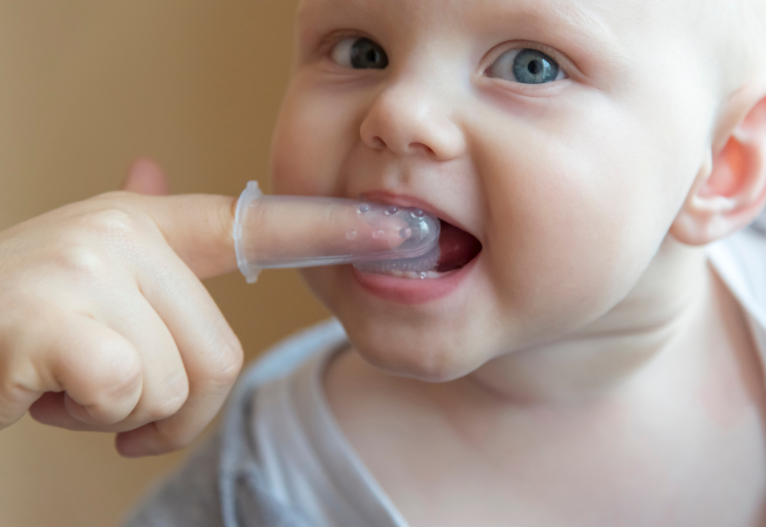
Teeth are unique in the body because they don’t heal. Once damaged by decay, the effects are permanent. Even if habits improve later in life, the consequences of poor oral health in childhood often remain. Fillings, root canals, early tooth loss – these are oral problems many adults have as a result of issues that began before they even started school.
First adult teeth come into the mouth around six years of age. So what can happen is that the infected and decayed baby teeth that you may think will fall out soon, welcome these adult teeth into a diseased environment. This results in healthy adult teeth being at a major risk of severe-life-long issues.
This is why early intervention matters so much: the earlier we support good oral health, the better chance we give that adult mouth to succeed.
Healthy habits begin early
Let’s talk for a moment about diet.
Young children used to regular sugary treats like ice creams, fruit juice or biscuits often develop a lifelong sugar habit that will see their secondary or adult teeth constantly exposed to sugar’s decaying powers too – and later in life, this sugar habit will have obvious consequences on health, weight and a range of other body health markers.
Teaching children to care for their teeth from a young age sets them up for lifelong good oral health. Habits like brushing twice daily with fluoride toothpaste, limiting sugary snacks and drinks, and attending regular dental check-ups so they’re used to the sights, sounds and sensations of a dental visit, all help to build confidence and resilience that lasts.
So when should the first visit be? The Australian Dental Association recommends a child’s first dental visit by age one, or soon after the first tooth appears. These early visits are not just check-ups – they’re opportunities to guide parents on feeding, brushing, teething, and preventing problems before they start. We know that early attenders can have up to 3 less extractions and fillings as a child.
What parents can do
- Brush twice a day with a soft toothbrush with no toothpaste just water, up to 17 months, and an age-appropriate fluoride toothpaste from 18 months of age.
- Avoid sugary snacks and drinks, especially between meals.
- Only send children to bed with a bottle containing plain water.
- Have regular dental visits, even if there are no visible issues.
Yes, baby teeth will fall out – but they leave behind a legacy. Early childhood is when the oral environment is shaped, the foundations are laid and the habits formed. If we get it wrong, adult teeth grow into a mouth that’s already set up to be compromised.
Protecting baby teeth isn’t just about avoiding fillings – it’s about giving every child the best chance at a healthy, pain-free future.
















-
-
-
Jessica said
- 21 Feb 2026
-

-
-
mom111059 said
- 30 Nov 2025
-

-
-
meedee said
- 06 Nov 2025
-

-
-
Ellen said
- 28 Sep 2025
-

-
-
Ellen said
- 28 Sep 2025
-

-
-
BellaB said
- 03 Sep 2025
-

-
-
sars_angelchik said
- 29 Aug 2025
-

-
-
Kylie Smith said
- 19 Aug 2025
-

-
-
mom160270 said
- 18 Aug 2025
-

-
-
TraceyGail said
- 15 Aug 2025
-
-
-
mom93821 said
- 15 Aug 2025
-

-
-
mom93821 said
- 14 Aug 2025
-

-
-
ChiWren said
- 11 Aug 2025
-

-
-
mom221746 said
- 09 Aug 2025
-

-
-
mom486197 said
- 09 Aug 2025
-

-
-
jenniw said
- 08 Aug 2025
-

-
-
mom325275 said
- 08 Aug 2025
-

-
-
Ellen said
- 08 Aug 2025
-

-
-
mom265671 said
- 07 Aug 2025
-

-
-
mom160270 said
- 07 Aug 2025
Post a comment9:03 pm
11:14 pm
11:53 am
7:56 am
7:50 am
6:50 pm
2:24 pm
11:40 pm
2:23 pm
7:55 am
4:25 am
6:26 am
7:55 pm
7:51 pm
6:07 pm
7:44 pm
2:29 pm
6:19 am
9:43 pm
8:04 pm
To post a review/comment please join us or login so we can allocate your points.